
NEWS & EVENTS
Alex Frodsham’s St Helena adventure
It’s hard to believe that I have had the privilege of travelling to one of the most remote islands in the world, St. Helena in the South Atlantic, to represent the island’s Government at an inquest into the death of a 17 year old boy who, tragically, took his own life.
There is only one flight per week to St. Helena, via Johannesburg, each Saturday – an added bonus for me as (although British by birth and descent) I spent nearly all of my childhood in Johannesburg, and travelling there is always special for me.
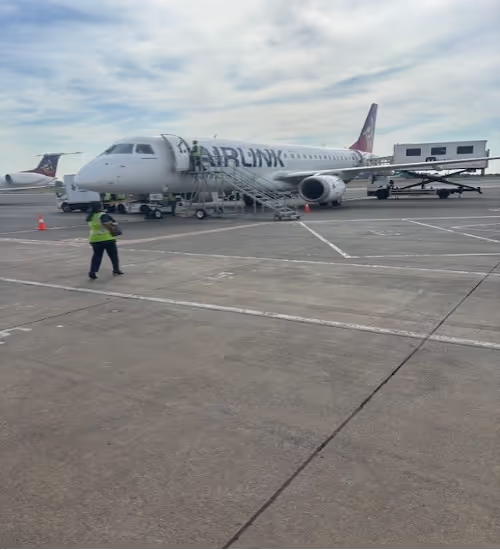
The outbound flight from JNB takes about 6 hours, and stops at Walvis Bay in Namibia to refuel (the aircraft is relatively small and only carries approximately 90 passengers). The landing at Walvis Bay was glorious, as the plane glided down in the desert without so much as a breath of wind to unsettle it.
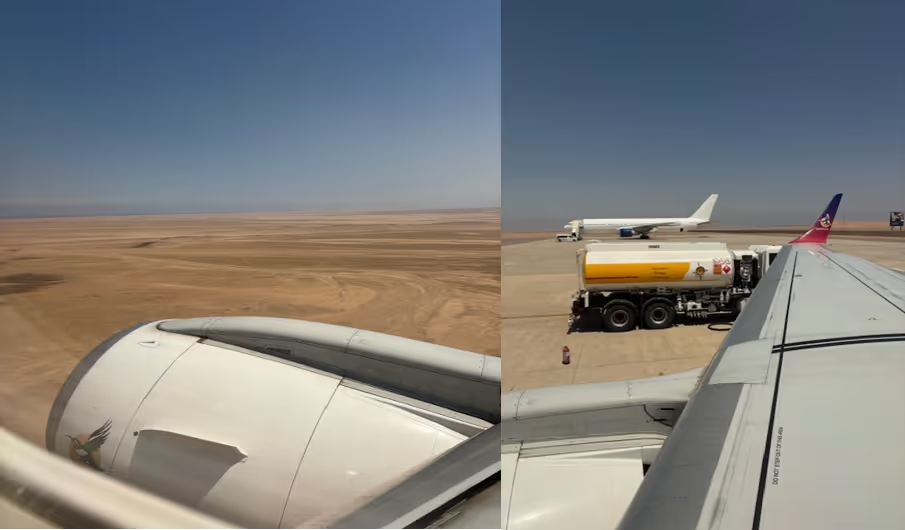
Over 1,200 miles later, the landing at St. Helena could not have been any more different: it’s a challenging landing for pilots, due to the high position of the runway (just below cloud level), the direction of the runway, and the strong gusts of wind that seem to come out of nowhere - not ideal for those of a nervous disposition! It’s only the outbound flight which stops to refuel at Walvis Bay, and this is to ensure that the aircraft has sufficient fuel to turn back to the African mainland in the event that a change in weather conditions means that it cannot safely land on the island.
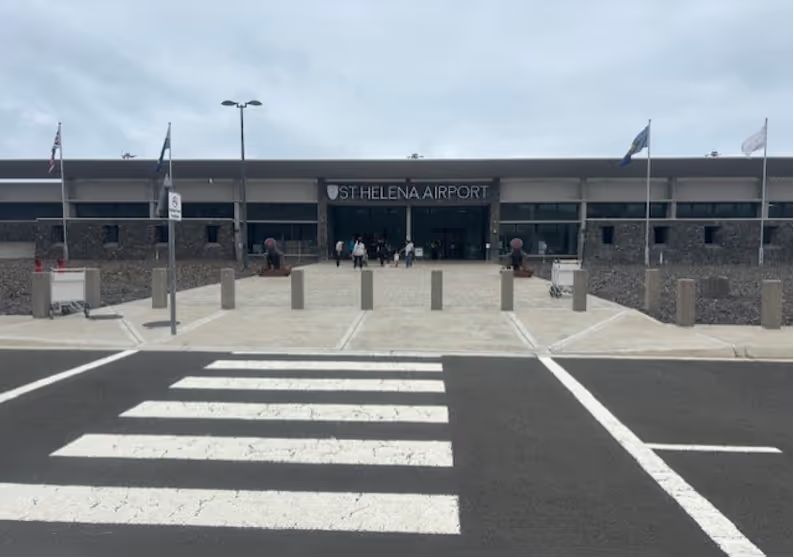
At the airport I was greeted by Crown Counsel who had instructed me on behalf of the Attorney-General, and she very kindly drove me to my accommodation in a mountainside area called Two Gun Saddle. The roads here are slightly terrifying, and it was explained to me that those travelling uphill on the narrow roads have priority over those travelling downhill; also, that it is customary for pedestrians and other drivers to wave as you drive by – what a friendly place! She also very kindly invited me for supper at her house in Alarm Forest, and recommended a taxi firm for me to call: “hello, please may I have a taxi from Two Gun Saddle to Alarm Forest” was a far cry from my typical request back home!
I was slightly nervous about the accommodation which had been arranged for me: would there be wi-fi? Would there be a washing machine? Would there be a shop nearby? The answers to these respective questions were “yes, yes, no”, but nothing could have prepared me for the glorious view from the living room and patio – I spent many hours enjoying a vista which somehow looked different every day with the very changeable weather here. The air must surely have been the freshest I’ve ever inhaled …
… and the silence was deafening.
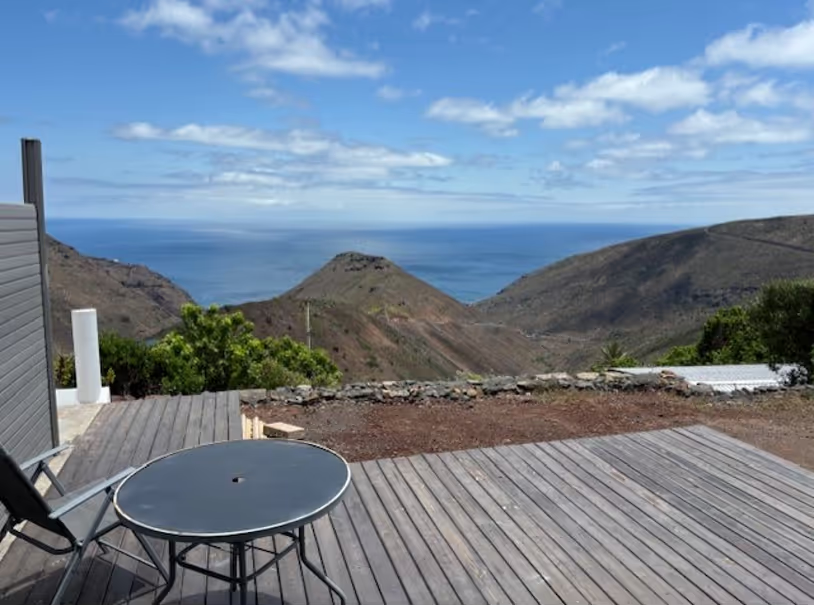
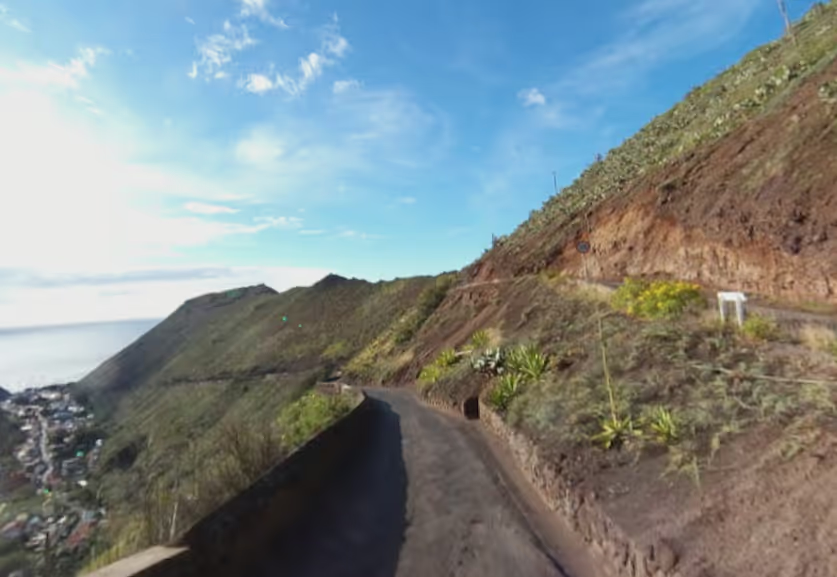
Two Gun Saddle sits high above Jamestown, the island’s capital, which is just under 10 minutes’ drive away. I was not looking forward to driving my hire car down these roads every day to get to Court, and particularly the section of road photographed below (with Jamestown to the left of the image, and a sharp hairpin bend behind the camera). On the plus side, there is very little traffic and certainly no traffic jams. The speed limit is 20 MPH across most of the island, and the highest speed limit is 30 MPH; with the very steep roads it was rare for me to get beyond second gear in any event!
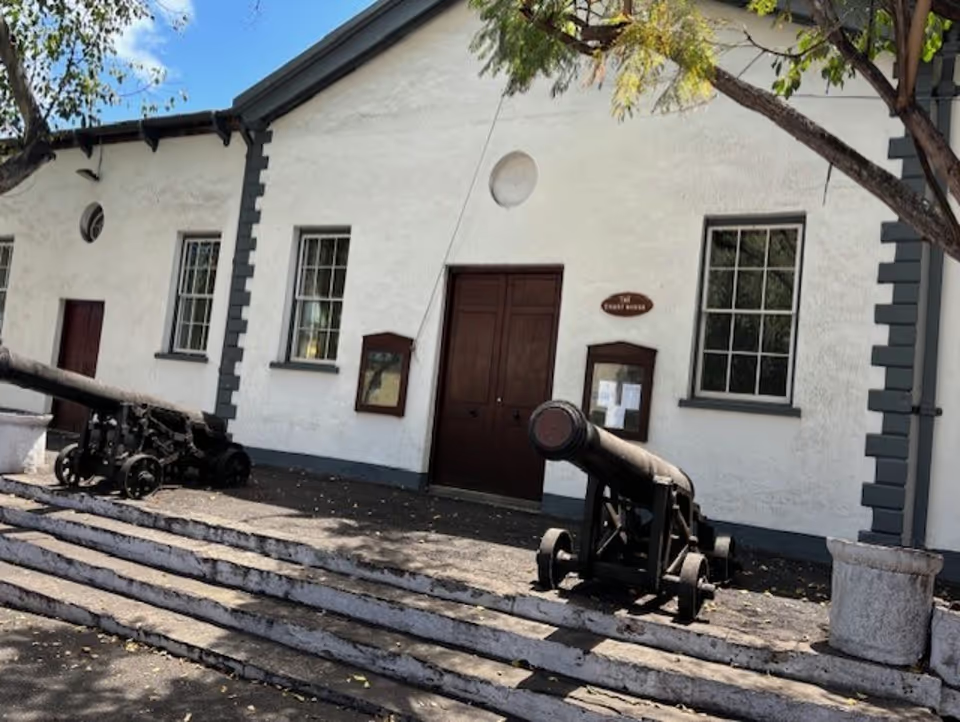
Monday, day 1 of what would be a 10 day inquest, was quickly upon me. The hearing was at the Court House in Jamestown, a building steeped in history, with canons at the entrance setting the scene for those entering its grand, and very traditional, courtroom. The inquest was quickly underway, heard before the Chief Coroner of St. Helena.
Although a British overseas territory, St. Helena has its own Constitution and its own rules of coronial procedure which differ only slightly from those at home, but differ nevertheless, and I needed to be familiar with them. There is no Article 2 ECHR over there: instead, our arguments regarding engagement of the state’s duty in respect of the right to life centred around sections 5 and 6 of the Constitution.
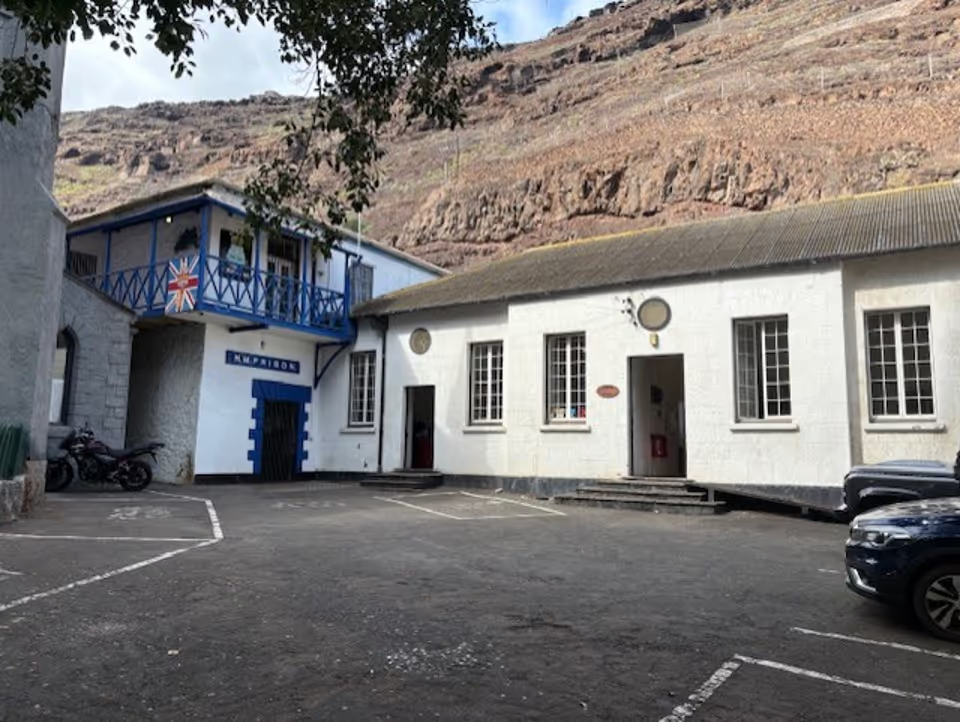
A short walk away from the Court, just across the square, sits the prison which currently holds 14 prisoners (with a maximum capacity of 28). The crime rate is low, and the people (“Saints”) are very respectful: it is a safe place, with the last murder on the island committed over 100 years ago. Adjoining the prison is the Attorney-General’s Chambers (my work base whilst on the island).
Jamestown is full of character, famous landmarks and beautiful buildings, all just a few minutes’ stroll away. It is also where the majority of the island’s shops and food stores can be found. Food shopping here is challenging: the food is brought in by ship once per month and, as the weeks go by, so the range of choice narrows. There are no supermarkets as we know them, but small to medium convenience stores where you may, or may not, find what you’re looking for. People repeatedly told me that you cannot really plan to cook anything – it’s a case of cooking whatever is available!
Although the currency is the pound, there are no ATMs and your UK bank card will rarely be accepted here to make payments; instead, a tourist banking app can be used which has a QR code which the retailer scans in order to debit the transaction cost from a pre-paid account.
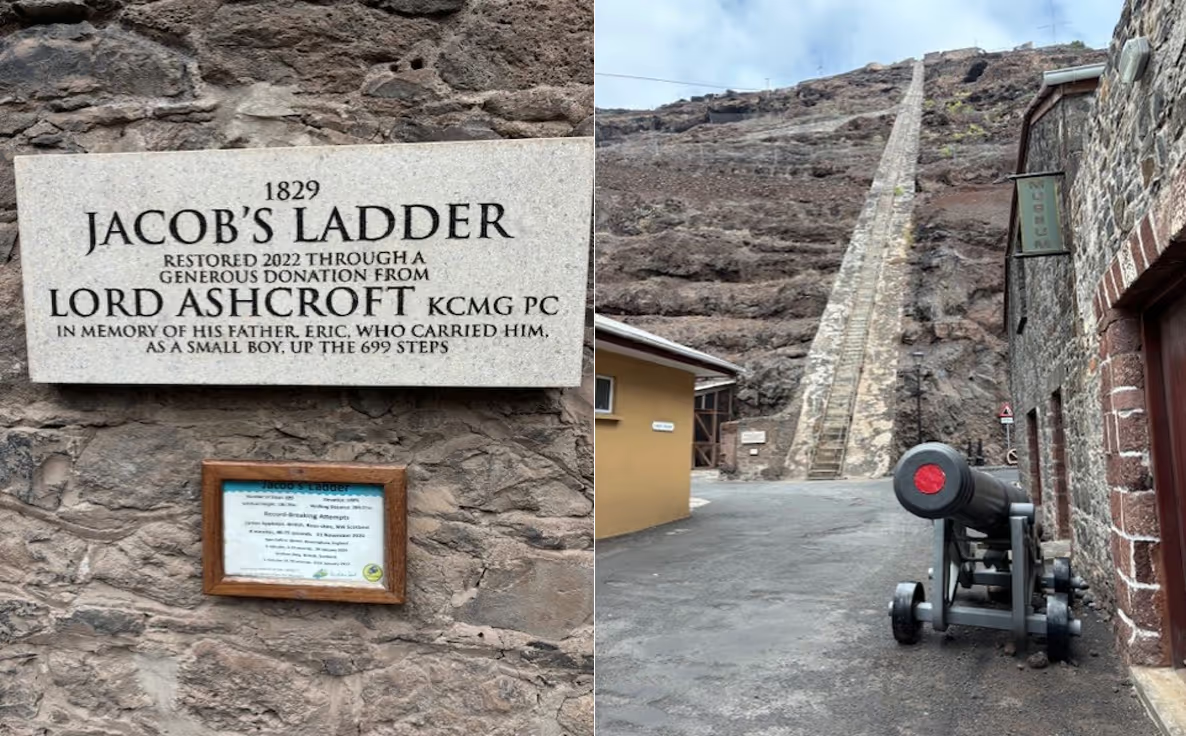
Shops aside, there is plenty here to see and do. For the very fit (and very brave), there are the 699 almost vertical steps of Jacob’s Ladder to climb …
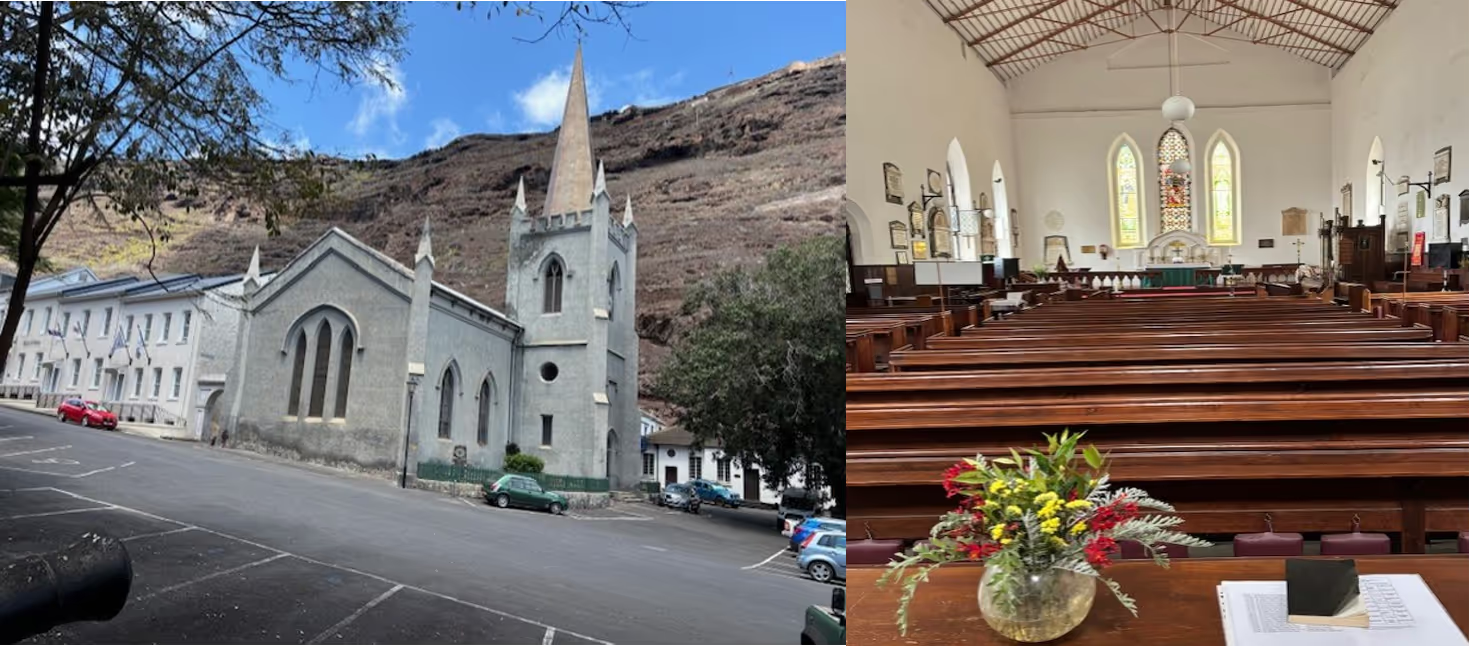
… perhaps preceded by a prayer at the beautiful St. James’ Church (the oldest Anglican church in the southern hemisphere) …
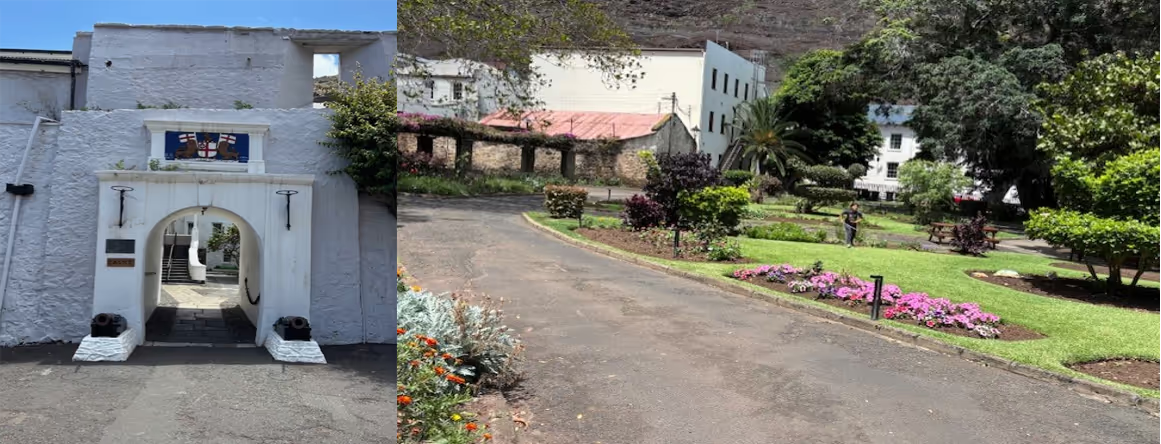
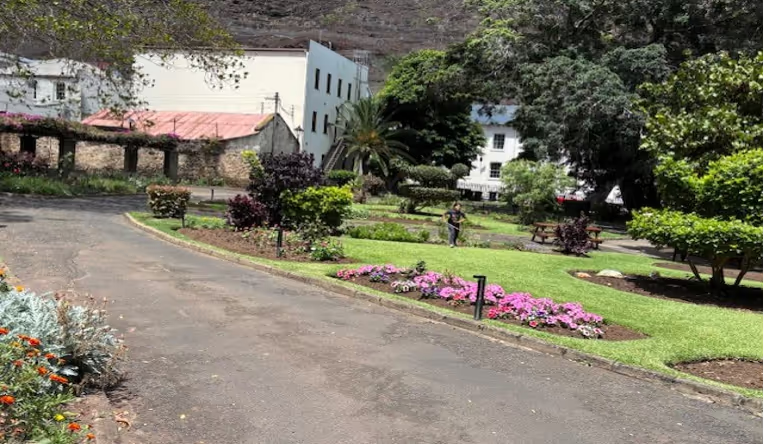
… or there is The Castle (home to the legislature) and the beautifully maintained Castle Gardens.
St. Helena has much to offer – there’s plenty to see across the island; fortunately, I was able to take opportunities to explore the island when not working on the inquest.
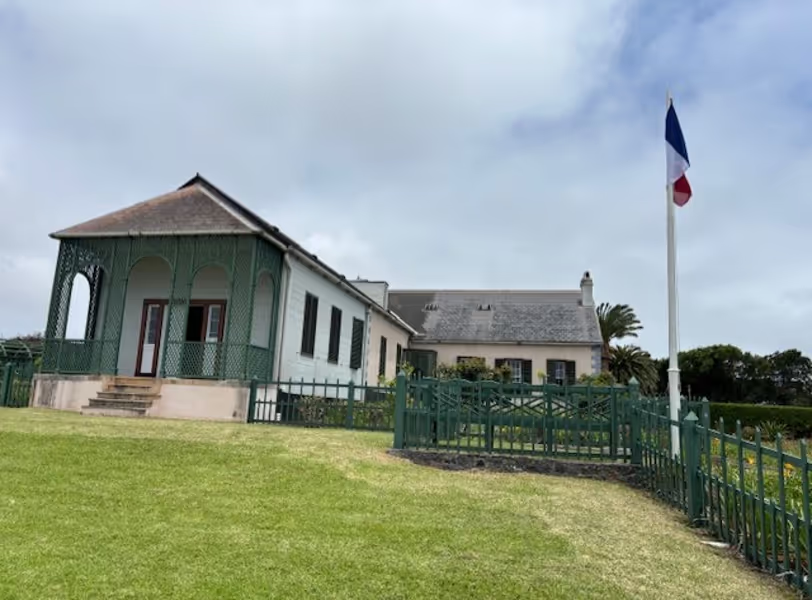
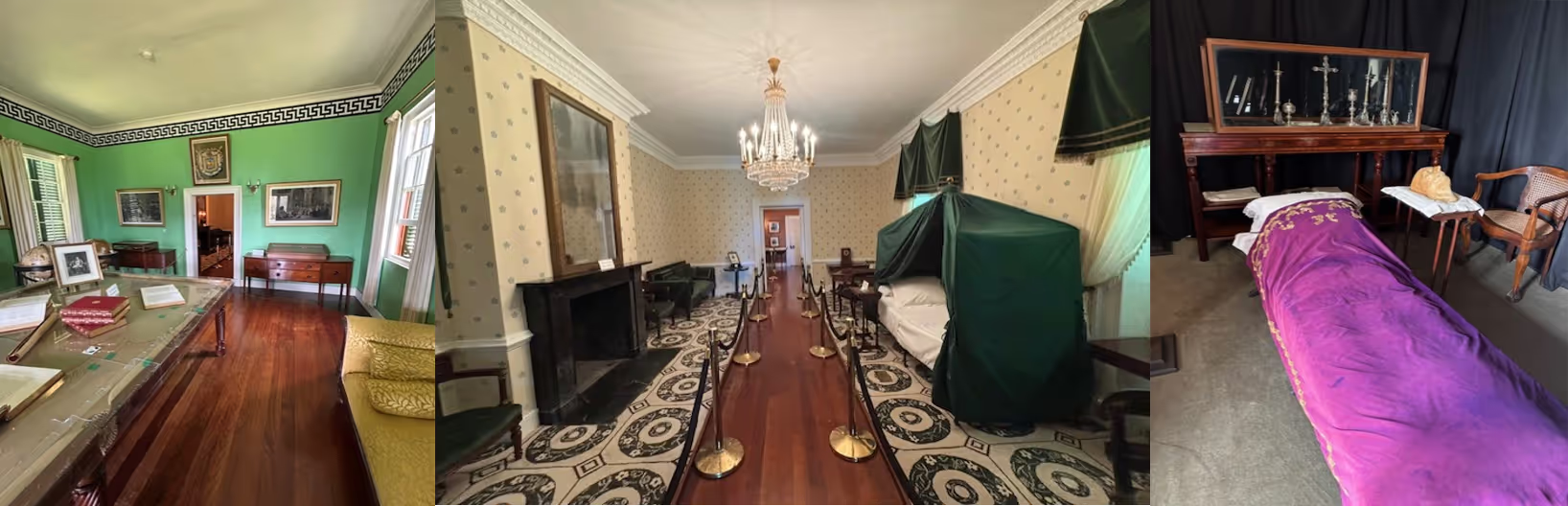
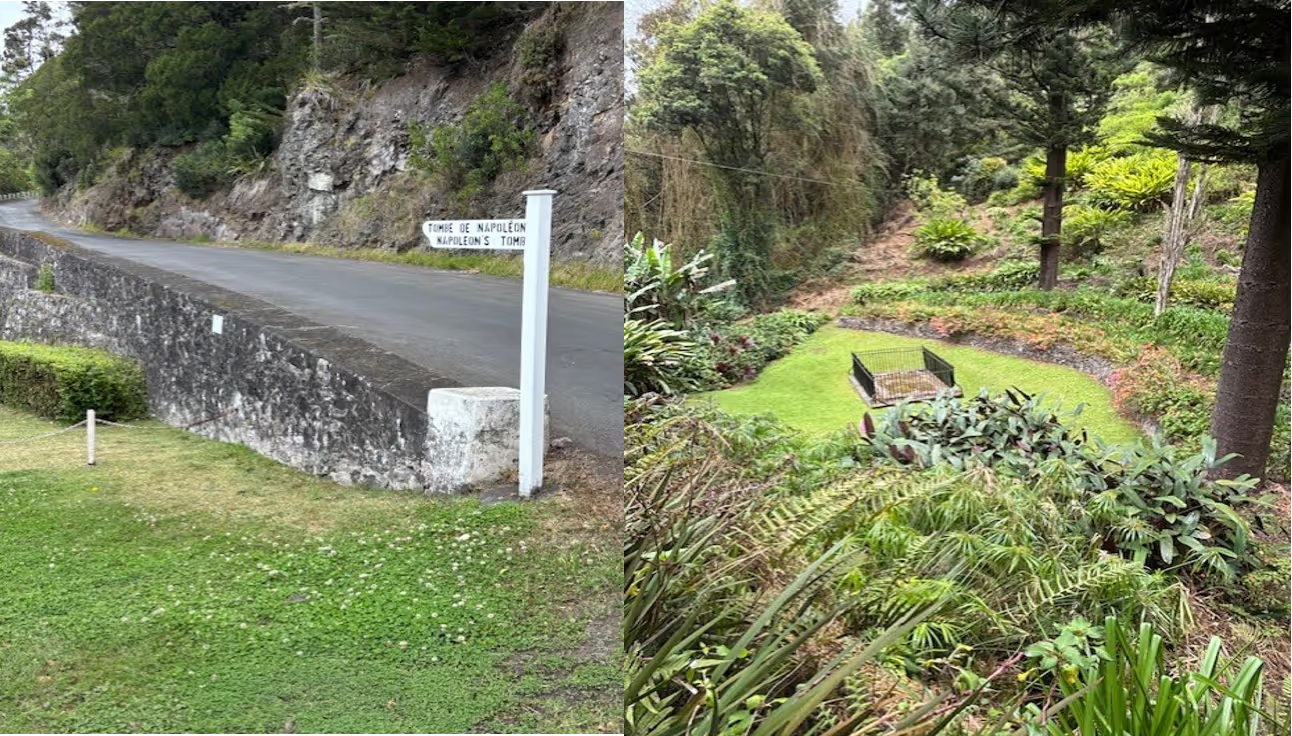
The island is, of course, famous for Napoleon’s life (and death) here whilst in exile, and I was lucky enough to visit his residence at Longwood House together with his (now empty) tomb. Although a prisoner, Napoleon does appear to have been treated respectfully by his captors. Both sites are now owned by the French Government, and are meticulously maintained.
Longwood House exterior:
Longwood house interior (including Napoleon’s death bed and mask):
Napoleon’s Tomb, in a truly beautiful setting:
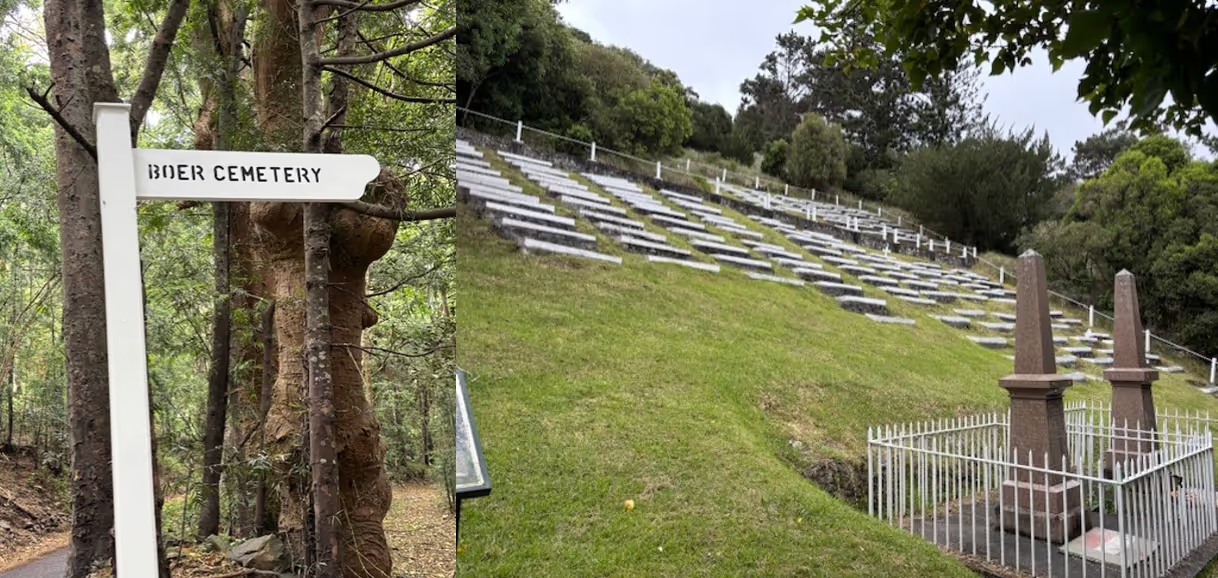
But it wasn’t only Napoleon who was brought to this island as a prisoner of war: approximately 6,000 Boers were shipped here and held in camps. I paid a visit to the Boer Cemetery, where 180 prisoners lie in numbered graves, with their names and corresponding numbers engraved on monuments at the entrance to the cemetery.
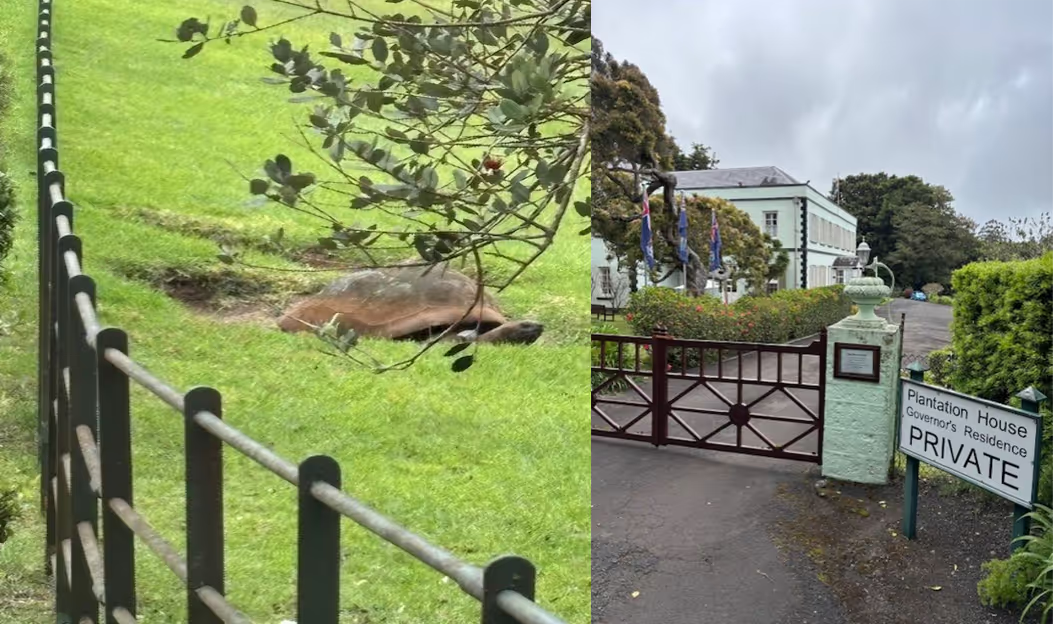
And no visit to St. Helena would be complete without a visit to Plantation House, home not only to the Governor but also to Jonathan the tortoise who, at 192 years old, holds the record as the world’s oldest known living land animal!
With the inquest having concluded on day 10 (week 2, Friday), and the weekly flight off the island scheduled to depart on Saturday afternoon, it all looked to have worked out perfectly. The Chief Coroner delivered his findings and conclusion at 10am (with the island’s Minister for Health, Chief Medical Officer, Portfolio Director of Health and Social Care, and Attorney-General all present in Court) and then invited counsel into his Chambers to bid us farewell and a safe trip home. And then came a knock at the door: the family’s solicitor had just received the news that, due to an incoming storm, our flight off the island would not be leaving before Tuesday, a delay of 3 days - we were stuck!
Arrangements were hastily made to secure our accommodation on island and our hire cars, and to re-book our flights to the UK from Johannesburg and our airport hotels. I was kindly permitted to use “the international phone” within the A-G’s Chambers to re-book my Air France flights (the use of a UK mobile over there costs a whopping £3 per minute).
We were provided with food and drink vouchers to spend, to the value of £20 per day, and local restaurants extended their opening hours to accommodate stranded (and increasingly thirsty!) patrons. I spent much time with my barrister colleagues, and we got to know each other very well – having shared this (extended) adventure together, I’m sure we’ll keep in touch and reminisce in the future.
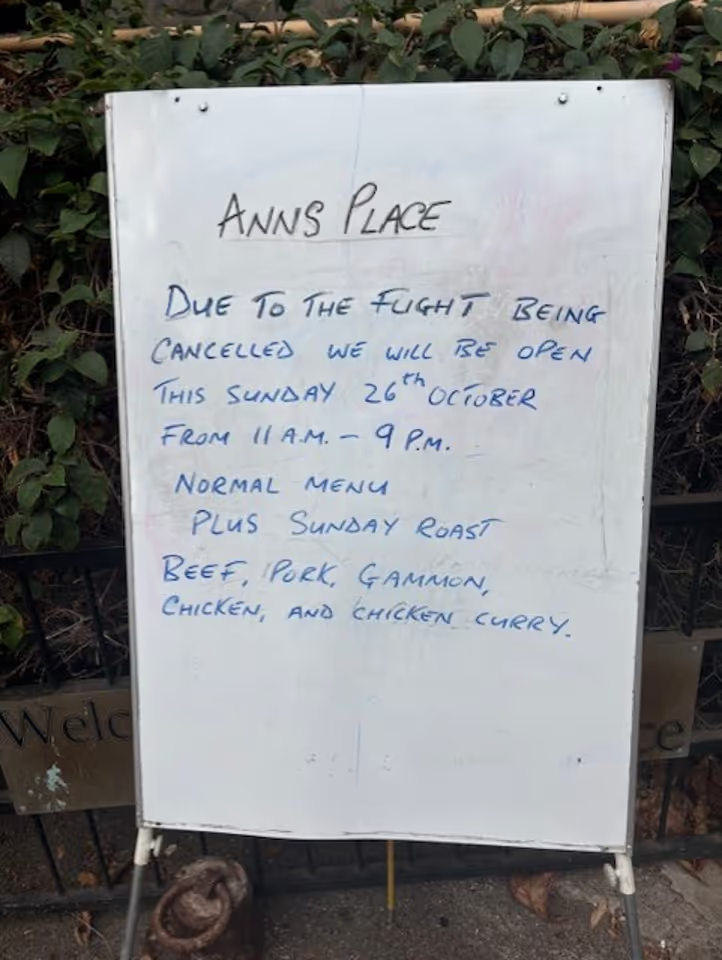
It was on the Saturday that one of my colleagues told me that he had overheard stranded yacht crew saying that they did not anticipate sailing before the following Wednesday, due to the weather: did this mean our flight would be delayed for 4 days instead of 3? We hoped not.
The weather turned quickly: driving rain, howling winds and strong gusts served as a reminder of St. Helena’s remote location in the South Atlantic, and many shipwrecks lie within the waters off Jamestown; the added feature of shearing winds poses a particular danger to aircraft.
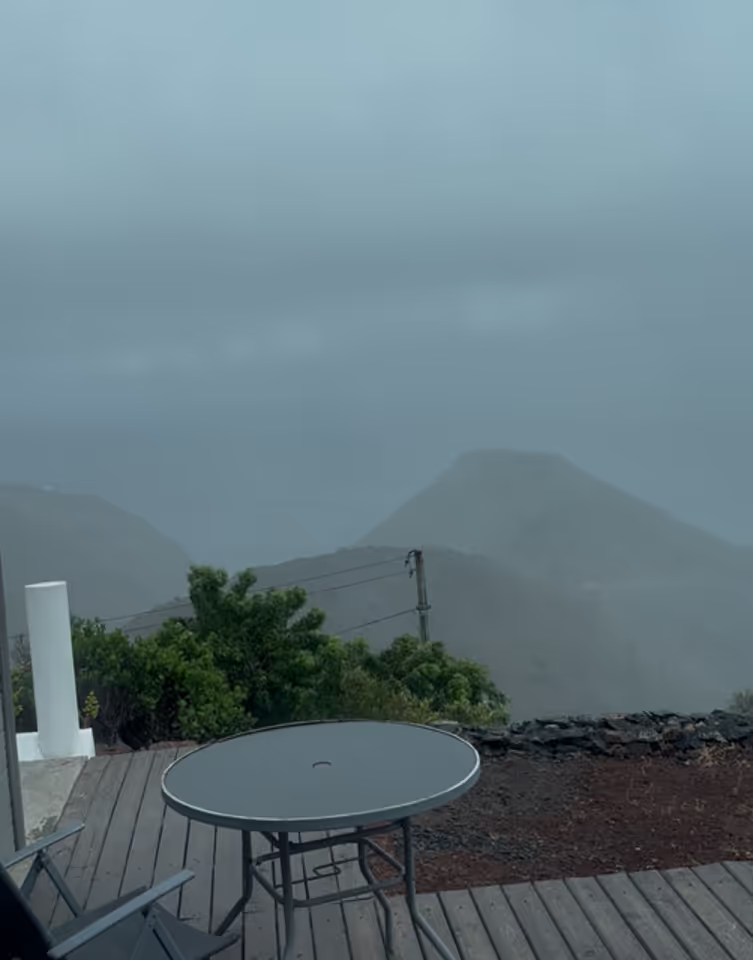
On Monday morning came the news that, due to persisting stormy conditions, our flight would be delayed for a fourth day – the sailors had been right all along! And so began the task of re-re-booking everything and collecting another meal voucher.
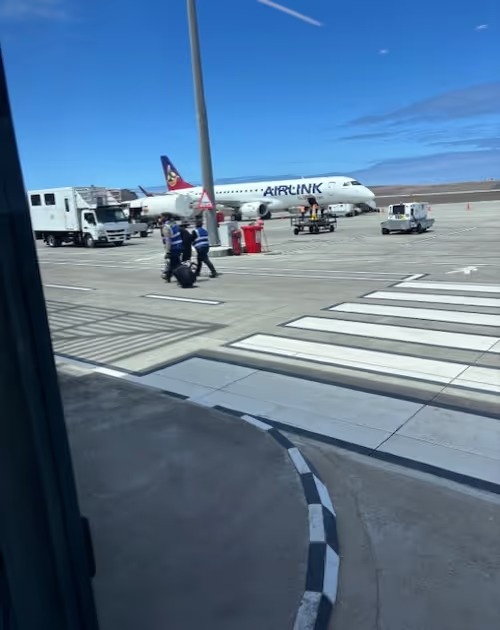
Happily, the forecast looked good, and we felt confident that we would finally be heading home. The news that the aircraft had departed Johannesburg was met with cheery anticipation. I made my way down to the Attorney-General’s Chambers to say my goodbyes, and to ask where I should deposit the keys to the hire car which I was driving to the airport.
“Just leave them in the car” was the response. “Really?”, I asked. “Yes, that’s quite normal here. The last vehicle theft we had was a tourist who drove off from the airport in the wrong hire car, but we soon found who it was and put them into the right one!”.
And so it was time to say goodbye to the truly unique island of St. Helena - thank you for the most fabulous adventure!
Knowledge hub





.avif)

